Victoria Falls, Zambia
Written on February 12th, 2026 by Dr Hobo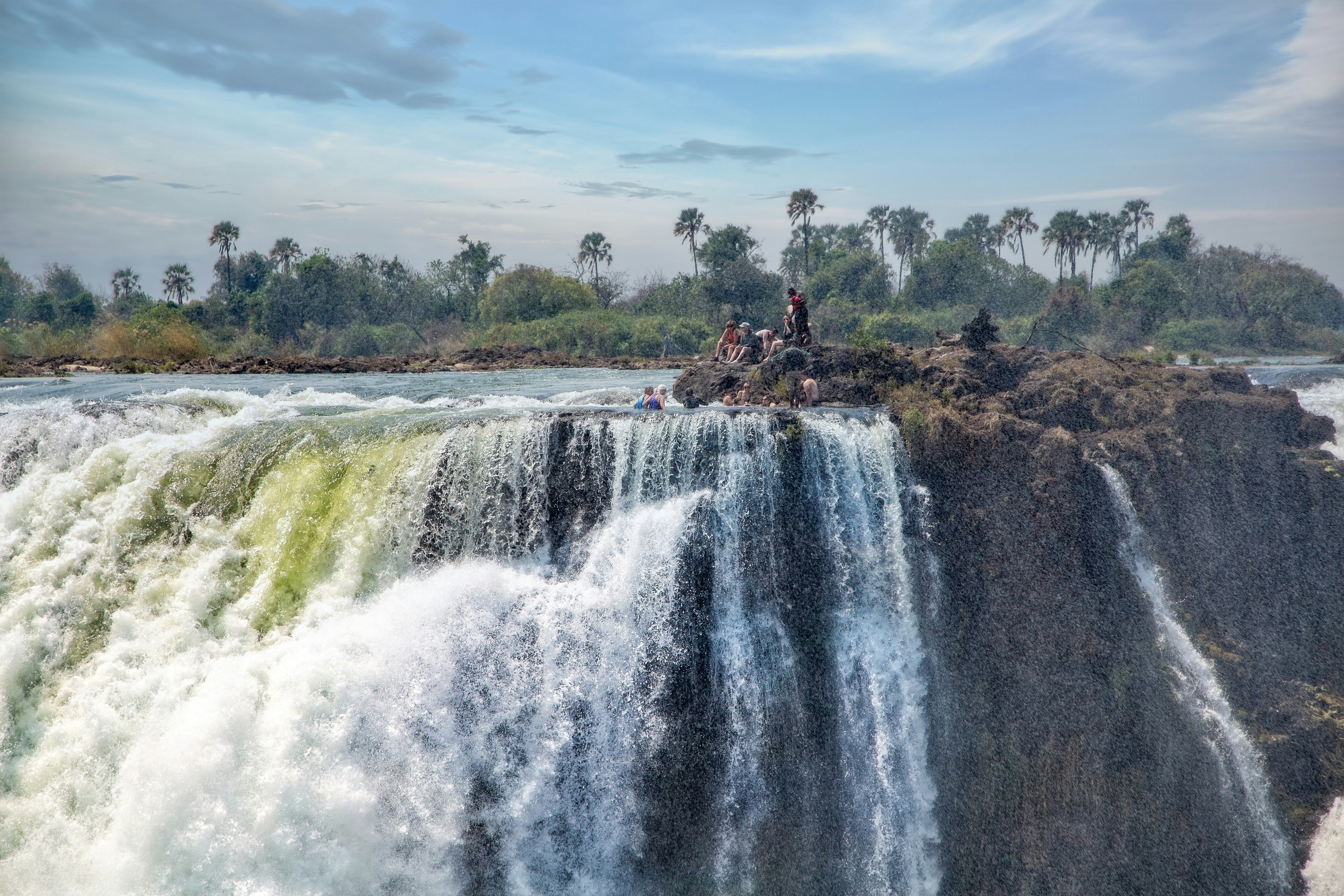
This is the second in a series of five about my favourite places visited whilst backpacking.
Victoria Falls, Zambia
Last visit: April 2013
Vibe: Adrenaline capital meets natural wonder
Zambia still conjures up the tired African clichés for a lot of people: poverty, tribalism, timelessness. It’s a country that barely registers on the map, sandwiched between its louder neighbours Zimbabwe and the Congo. That’s a shame because the place is moving fast. Lusaka is a surprisingly modern capital, and hosted the UN’s tourism assembly the year I visited. Not what I’d expected, which probably says more about my expectations than about Zambia.
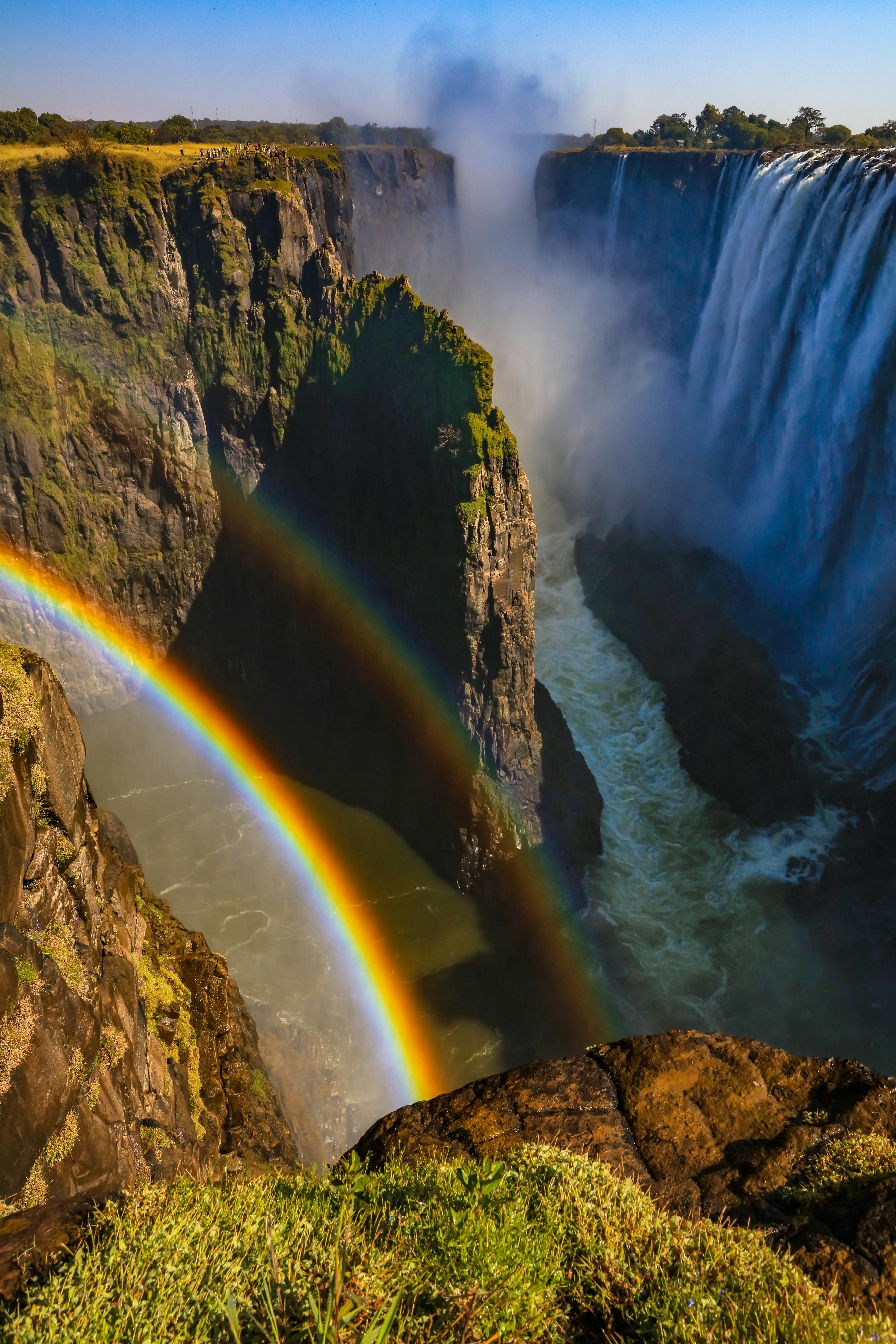
Plenty of people go to Livingstone for the bungee jump or the grade 5 white water rafting. For me the best bit was just walking around Victoria Falls National Park. Tropical foliage, the odd sandwich-stealing monkey, and the slightly nervous feeling you get when you know you’re about to see something enormous. Easy to see why Dr Livingstone got obsessed with the place.
Despite the tour groups and the camera phones, the place still feels raw. You cross this Indiana Jones-style bridge to a cliff stack that sits right in front of the falls, dressed only in boots, shorts and a hat, and end up dancing soaking wet on a cliff edge with a permanent rainbow overhead and Victoria Falls right there in front of you. Not bad for a day out.
There’s culture on tap too. The Lozi people hold an annual ceremony called the Kuomboka to celebrate the Zambezi flooding, and the king leads the procession. It’s 300 years old and has one detail I can’t get over: the king turns up dressed as a Victorian ambassador. Every royal ceremony should have something that weird.
In sum: A must if you’re into outdoor adventure and don’t mind sharing the falls with tour groups. Not so much if you’re looking for undiscovered Africa or avoiding tourist infrastructure - see the extract below for more of that.
Diary Extract - Sioma Falls (further up the Zambezi)
Sioma was a rough frontier town in every way possible. Prices were high, townspeople were tough, and the food at the restaurant was tasteless. I couldn’t even convince anyone to rent out a bike so I could visit the Sioma Falls about 10k away. I had faith that my traveller’s luck would hold out though, and I would be able to hitch-hike the majority of the distance.
After 10 minutes I did get lucky and found myself outside the visitor’s centre for the ‘Sioma Falls National Park’. Knowing full well it was only classed as a ‘National Park’ so they could charge me some ridiculous fee, I attempted to slyly slip past the Park centre unnoticed. Unfortunately, a truck full of intimidating and armed park rangers drove past as I was just about to make my unauthorised detour. Slightly alarmed at the sight of a lone white man on foot, they stopped and asked questions. They ‘correctly’ assumed I was lost and pointed me in the right direction of the visitor centre.
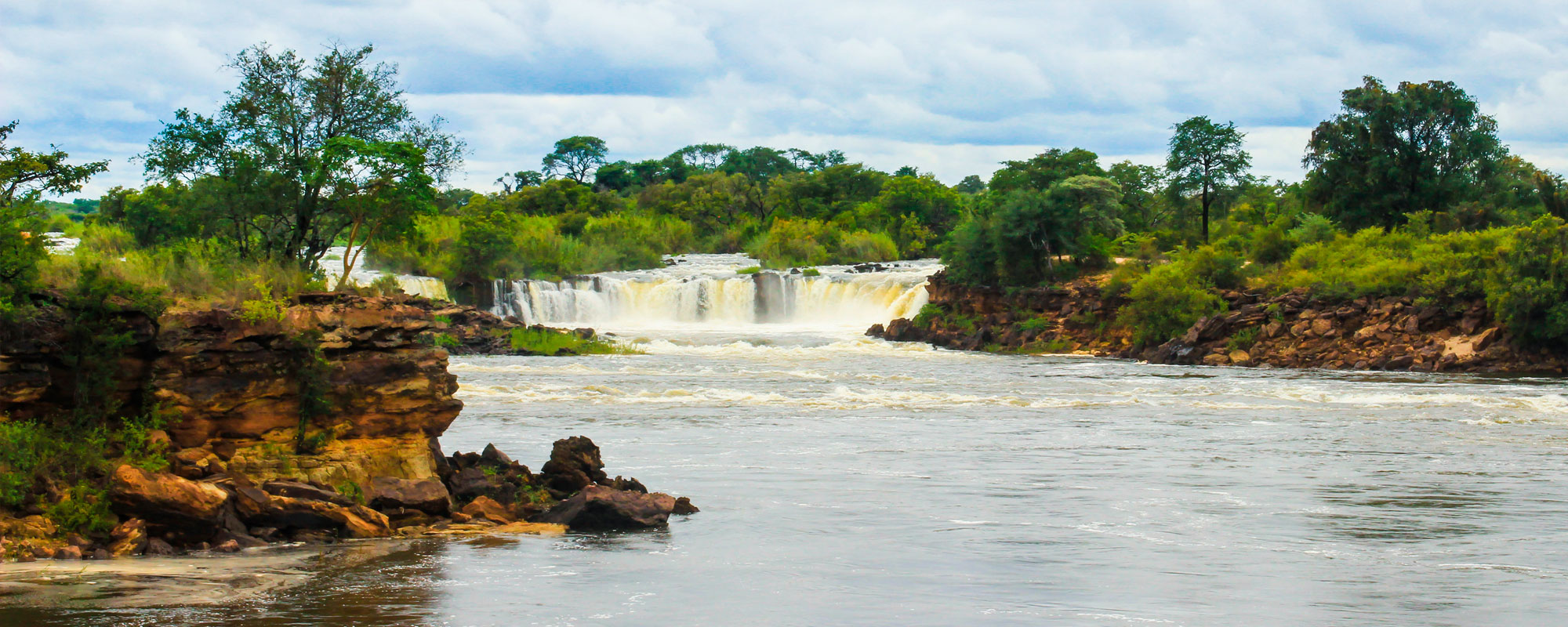
Twenty minutes later and about 50 Kwacha short, I was escorted to see the falls. Had I brought with me a few friends, some beers and a picnic it would have been a nice afternoon out. As it was, I had a guide who said no to all my requests:
Can I go over there? No.
Can I have a look at this waterfall? No.
Can I paddle over here? No.
Can I push you off this ledge? No.
After taking a few pictures I decided to hit the road again. As I began to walk back north towards Sioma, a pickup truck going in the other direction stopped and the people in it actually invited me to stay the night at their lodge.
I was initially cautious as there was a mad assortment of people in this pickup truck. It contained: an elderly Italian man who, after years of smoking and drinking, had reduced himself to a semi-catatonic state whereby he could only walk with assistance and speak coherently for two or three hours of the day. His Zambian wife, the very charismatic ‘Auntie Julia’, fortunately spoke enough for both of them. With them was ‘Uncle Doogle’ and two teenage lads visiting their Aunty Julia to escape the madness of Lusaka to visit ‘the bush’ for the first time.
These guys were half Greek, half Zambian. When I learnt this fact I couldn’t resist asking if they knew my university friend from 6 years ago who was also Greco-Zambian - and as it turned out, they did! This was the deciding factor and I said yes to their very kind offer. I hopped into the back of their truck with all the other Zambian hitch-hikers and ended up staying the night at what must be the most beautifully located poultry farm in the African sub-continent.
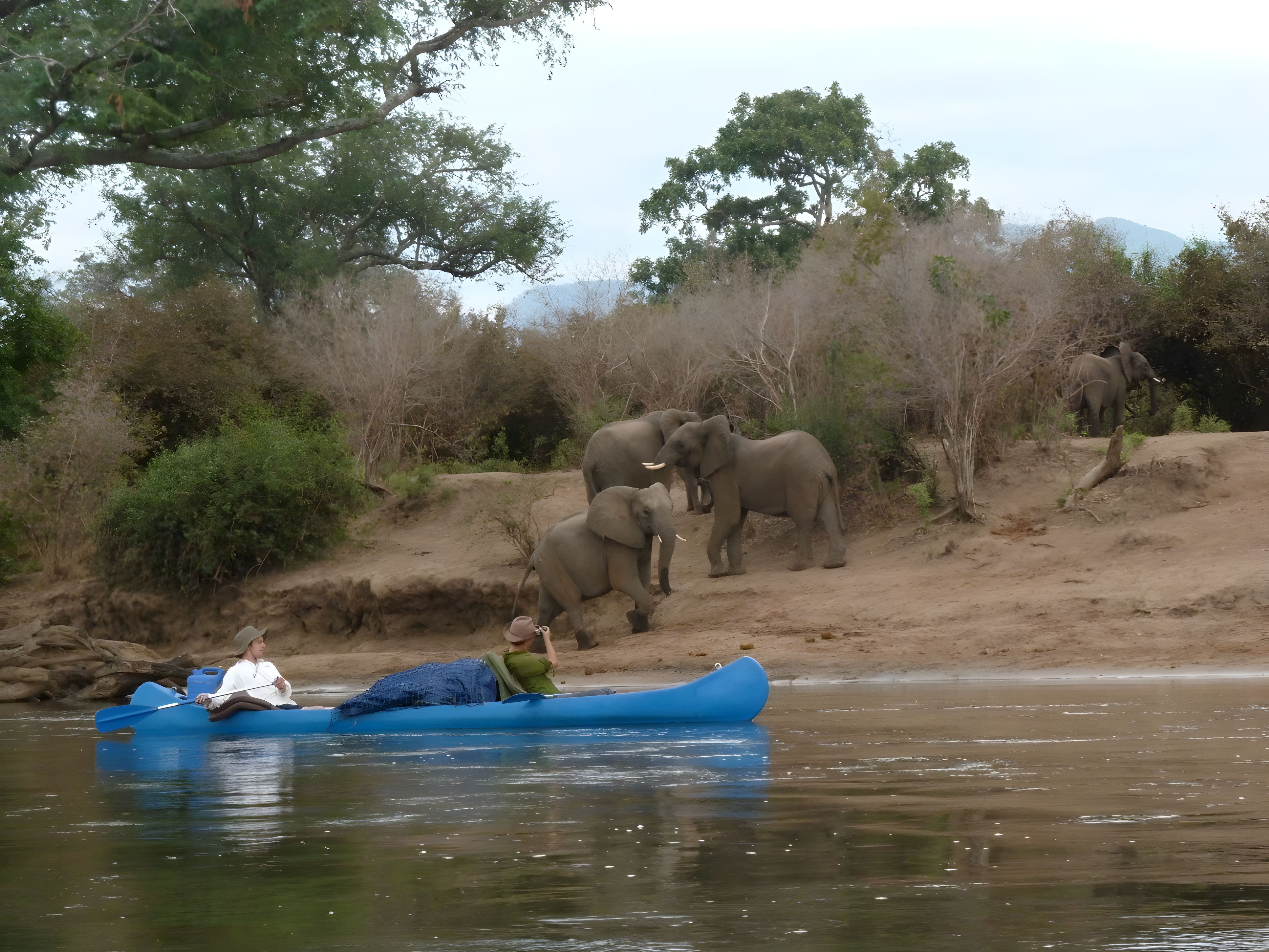
Their lodge overlooked possibly the most stunning part of the Zambezi I had seen. Better yet, they had a canoe resting on the river bank screaming to be used. As it turned out, the two teenage boys were up for going for a paddle as well. Unfortunately however, the Zambian worker Aunty Julia hired as a domestic worker/fisherman/canoe paddler was blind drunk.
Being the hero that I am, I told Julia of my kayaking qualifications and that I would be more than willing to paddle the boys around the islands of the Zambezi. With a nonchalant warning about crocodiles and what not, we were off! After a few photos, a bit of fishing, a quick swim and a sudden realisation that I had full responsibility for the livelihood of these boys, I paddled us back just in time for tea.
The Zambezi in Literature: Wilbur Smith’s A Falcon Flies (1980)
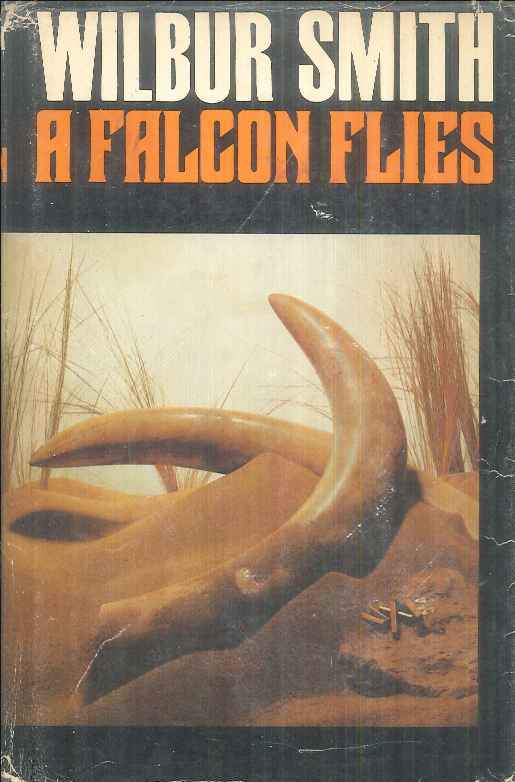
Long before I set foot in Zambia, I was obsessed with Wilbur Smith’s adventure novels set in southern Africa. I read them in my late teens, and his descriptions of the Zambezi Valley - the wildlife, the landscape, the general chaos - stuck with me. Years later I finally made it out there.
A Falcon Flies, the first in his Ballantyne series, follows Dr Robyn Ballantyne and her brother Zouga as they head up the Zambezi in 1860 looking for their missing father. Smith doesn’t undersell the river: the hippos, the crocodiles, the rapids. All still there when I eventually paddled it myself in a dugout. He wasn’t exaggerating.
When Auntie Julia casually warned me about crocodiles before I paddled her nephews around, I kept thinking: “Wilbur Smith prepared me for this moment.” He really didn’t, of course. But it felt romantic to pretend he had.
Next in the series: Brazil, Trancoso